
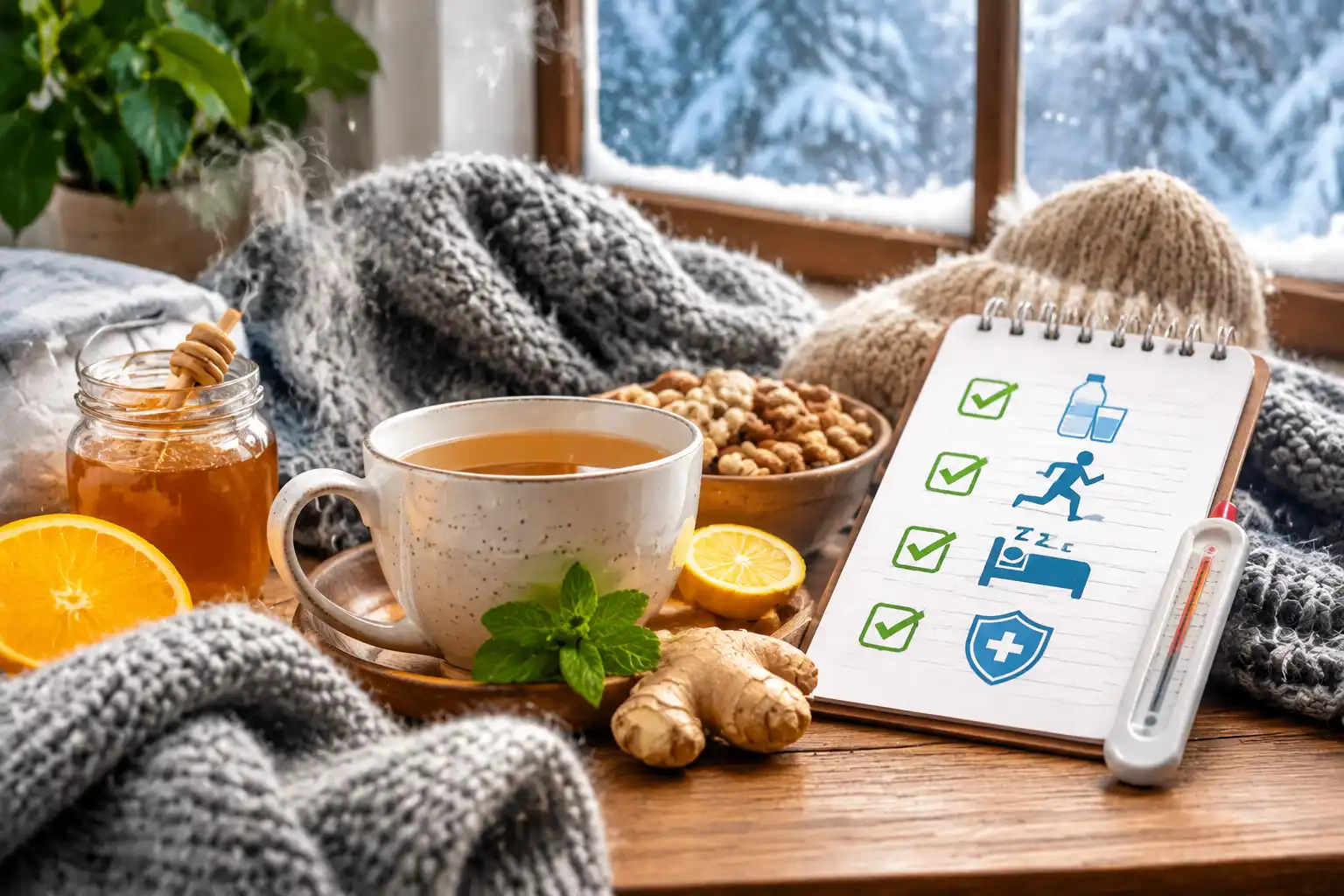
Winter has a way of sneaking up on you. One week you’re enjoying the cooler evenings, and the next, half your office is coughing and you’re wondering if that scratchy throat is “something.”
The good news is that most winter illness isn’t bad luck. A lot of it comes down to small daily habits: how you sleep, what you drink, how you heat your home, and even how long you wash your hands.
Below are 12 simple, research-backed winter health tips. None of them need a gym membership or expensive supplements, just a bit of consistency.
Why Do We Get Sick More in Winter?
A few things stack up at once when the temperature drops:
- We spend more time indoors, close to other people, so germs spread more easily.
- Indoor air gets very dry. Cold outdoor air holds very little moisture, and once it’s heated indoors, it can drop to just a few percent relative humidity.
- Less sunlight means less vitamin D and, for many people, lower mood and energy.
- Heaters bring their own risks, especially gas and coal heaters in closed rooms.
Once you know these triggers, the habits below make a lot more sense.
12 Winter Health Tips to Stay Healthy This Season
1. Get Your Flu Shot (It’s Not Too Late)
If you only pick one habit from this list, make it this one. The CDC calls a yearly flu vaccine the first and most important step to lower your risk of flu and its serious complications, and recommends it for everyone 6 months and older.
Missed the ideal window? The CDC suggests getting vaccinated by the end of October, but says it’s still worth getting the shot as long as flu is spreading in your community. So if you haven’t had yours yet, book it this week.
For adults 65 and older, high-dose and adjuvanted shots are preferred. Ask your doctor or pharmacist which one suits you.
2. Wash Your Hands the Right Way
Most of us rinse our hands for about five seconds and call it done. That isn’t enough. According to the CDC’s handwashing guidance, you need to scrub for 20 seconds to properly remove germs. Wash for less time and more germs stay behind.
An easy timer: hum “Happy Birthday” from start to finish twice. Wash especially before eating, after using the bathroom, and after blowing your nose. Keep a small sanitizer in your bag for times when soap isn’t available.
3. Protect Your Sleep
Long winter nights should make sleep easier, but late-night scrolling often wins. The CDC advises adults to get at least 7 hours a night, and research shows that regularly missing sleep can weaken your immune response and make you more likely to catch colds or flu.
A few things that genuinely help:
- Go to bed and wake up at the same time, even on weekends.
- Put your phone away 30 minutes before bed.
- Keep the bedroom cool and dark. A heavy blanket is better than a hot room.
4. Drink Water Even When You’re Not Thirsty
In summer, thirst reminds you to drink. In winter, it often doesn’t. Doctors regularly point out that dehydration is a common winter problem simply because people drink less water than usual.
Warm drinks count. Herbal tea, warm water with lemon, and soups all add to your daily fluid intake. If plain water feels boring, keep a bottle on your desk and refill it twice a day. That alone makes a big difference.
5. Eat Seasonal, Colorful Foods
Winter brings some of the best produce of the year: oranges, guavas, carrots, spinach, sweet potatoes, and more. Try to fill half your plate with fruit and vegetables, and add protein at every meal (eggs, lentils, chicken, fish, or yogurt).
Homemade soups are a winter hero. They’re warm, filling, hydrating, and an easy way to sneak in extra vegetables. Go easy on fried snacks and sugary drinks, which tend to creep up when it’s cold. For more simple eating and lifestyle advice, explore our health and wellness guides.
6. Think About Vitamin D
Your skin makes vitamin D from sunlight, and winter sun is weak, especially in northern countries. The NHS explains that during autumn and winter, the sun isn’t strong enough for your body to make vitamin D, so you need to get it from your diet.
UK health guidance advises that everyone consider a daily supplement of 10 micrograms (400 IU) during autumn and winter. More is not better: the NHS warns against taking more than 100 micrograms (4,000 IU) a day, as it could be harmful.
Food sources include oily fish, egg yolks, and fortified milk or cereals. If you have a health condition or take other medicines, check with your doctor before starting a supplement.
7. Keep Moving, Even Indoors
Cold mornings make the bed feel extra comfortable, but staying active helps your mood, your weight, and your energy levels. The usual target for adults is at least 150 minutes of moderate activity a week, plus muscle-strengthening work on at least two days.
That’s only about 20 minutes a day. If it’s too cold outside, try:
- A brisk walk around a mall or indoor track
- A 15-minute home workout or yoga video
- Climbing stairs instead of taking the lift
8. Dress in Layers
Several thin layers trap warm air better than one thick jacket, and you can remove one when you step into a heated room. A good setup is a base layer that keeps moisture off your skin, a warm middle layer (fleece or wool), and a windproof outer layer.
Don’t forget your head, hands, and feet. They lose heat fast, and cold feet can keep you awake at night. Want to stay warm without giving up on style? Check out our latest winter fashion ideas.
9. Keep Indoor Air From Getting Too Dry
Dry indoor air is behind many small winter complaints: cracked lips, itchy skin, and a dry, irritated nose. The EPA recommends keeping indoor humidity below 60%, ideally between 30% and 50%.
A cheap hygrometer will tell you where your home stands. If the air is too dry, a humidifier, a bowl of water near the heater, or indoor plants can help. Just don’t overdo it: too much humidity on freezing days causes condensation on windows and cold walls, which can lead to mold.
10. Heat Your Home Safely
This is the tip people skip, and it’s the one that saves lives. According to the CDC, the risk of carbon monoxide (CO) poisoning rises in winter when heaters run for hours, and at least 420 people die from accidental CO poisoning in the U.S. every year.
CO has no smell or color, and it’s especially dangerous at night. People who are asleep can be poisoned before they ever notice any symptoms.
Stay safe with these steps:
- Never leave a gas or coal heater running in a closed room overnight.
- Keep a window slightly open for ventilation when using a gas heater.
- Never burn charcoal inside homes, vehicles, or tents, even with ventilation.
- Install a CO alarm and change its batteries every six months.
- Get gas heaters and geysers checked by a professional once a year.
If anyone feels a headache, dizziness, or nausea while a heater is on, get everyone outside into fresh air immediately.
11. Look After Your Skin and Lips
Cold wind outside and dry heat inside are a rough combo for your skin. A few easy fixes:
- Take shorter showers with lukewarm water instead of very hot water.
- Apply moisturizer within a few minutes of bathing, while your skin is still slightly damp.
- Use a lip balm and switch to a gentle, fragrance-free soap.
- Still wear sunscreen on bright days. Winter sun can burn, especially at higher altitudes.
12. Take Care of Your Mood
Shorter days affect more than your body. Many people feel low, tired, or unmotivated in winter. It’s often called the “winter blues,” and for some it’s a more serious condition called seasonal affective disorder (SAD).
Small steps help:
- Get outside in daylight, ideally in the morning, even for 15 minutes.
- Keep plans with friends and family instead of hibernating.
- Stick to regular meal and sleep times.
If low mood lasts more than two weeks or starts affecting your work and relationships, please talk to a doctor or mental health professional. It’s common, and it’s treatable.
Quick Summary: Your Winter Health Checklist
| Habit | Simple daily action |
|---|---|
| Flu shot | Book it this week if you haven’t yet |
| Handwashing | 20 seconds with soap, especially before meals |
| Sleep | At least 7 hours, same bedtime daily |
| Hydration | Keep a water bottle in sight; count warm drinks |
| Diet | Half your plate fruit and vegetables |
| Vitamin D | Consider 10 mcg a day (ask your doctor first) |
| Exercise | About 20 minutes of movement a day |
| Clothing | Wear layers; cover head, hands, and feet |
| Indoor air | Keep humidity around 30–50% |
| Safe heating | Ventilate rooms; install a CO alarm |
| Skin care | Lukewarm showers, moisturize right after |
| Mood | Morning daylight and time with people |
When Should You See a Doctor?
Most winter colds get better on their own in a week or so. But see a doctor quickly if you notice:
- Difficulty breathing or chest pain
- A high fever that lasts more than three days
- Symptoms that improve and then suddenly get worse
- Signs of dehydration, such as very little urine or dizziness
- Any symptoms in babies, older adults, pregnant women, or people with heart, lung, or diabetes problems
Frequently Asked Questions
How can I boost my immunity naturally in winter?
There’s no single magic food. Your immune system works best when you sleep at least 7 hours, eat a balanced diet, stay active, manage stress, and drink enough water. A flu vaccine adds strong extra protection.
Is it too late to get a flu shot in December or January?
No. The ideal time is before the end of October, but vaccination is still worthwhile as long as flu is spreading in your area.
Should everyone take vitamin D in winter?
UK health guidance suggests most people consider 10 micrograms a day from autumn to spring. People with medical conditions, or who take other medicines, should ask a doctor first, and no one should go above 100 micrograms a day.
Is it safe to sleep with a gas heater on?
It’s risky. Gas heaters in closed rooms can build up carbon monoxide, which you can’t see or smell. Turn heaters off before sleeping, or at least keep the room ventilated and install a CO alarm.
Why does my skin get so dry in winter?
Cold air holds little moisture, and indoor heating dries it further. Use lukewarm water, moisturize right after bathing, and keep indoor humidity around 30–50%.
Final Thoughts
Staying healthy in winter isn’t about doing everything perfectly. It’s about stacking a few good habits: get the flu shot, wash your hands properly, sleep enough, drink water, keep moving, and heat your home safely.
Pick two or three habits from this list and start today. Once they feel natural, add a few more. By the time spring arrives, you’ll likely notice fewer sick days and more energy.
Looking for more practical tips like these? Browse our Health section for new guides every week.
Disclaimer: This article is for general information only and isn’t a substitute for professional medical advice. Please consult your doctor for advice about your own health.